Folded to do a job.
Letter, Z and double-parallel folds, folded on the same floor they are printed on. Which one to pick depends on how the piece gets read, not on which is easiest to run.
Which fold, and why
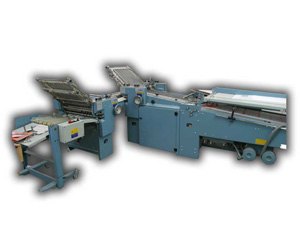
Letter, Z and double-parallel folds all run on the same folders, with a right-angle unit for a fold at 90° to the first (see the equipment page). Which one suits a brochure depends on how it gets read, not on which fold is easiest to run.
- Letter fold, also called a tri-fold — two folds, three panels, one tucked slightly inside the other two. The standard rack brochure: a cover panel facing out, three inside panels read in order once it is opened.
- Z fold — two folds in opposite directions, so the piece opens flat like an accordion instead of tucking closed. Every panel shows at the same width, which suits a step-by-step process or a timeline better than a cover-and-reveal message.
- Double parallel — folded in half, then in half again the same way. Eight panels off one sheet, in a piece that opens small and unfolds big: more room for content than a letter fold gives, still sized to fit an envelope or a rack.
Not sure how a flat size folds down into those panels? The fold and panel calculator works out the panel count and widths from a flat size and a fold type.
Stock, and why heavier paper gets scored first
A fold in light paper is just a crease. A fold in a heavier cover stock cracks the coating along the fold line unless it is scored first — a crease pressed into the sheet before folding, so the paper bends along a line instead of breaking one. If the brochure is going on a heavier stock, say so early: the score has to happen before the fold, not after (bindery).
Digital or offset, and when a brochure becomes a booklet
Quantity decides the press the same way it does for the rest of the product list: a short run suits digital, and a long run of the same brochure gets cheaper per piece on offset once there is enough quantity to spread the plate cost across. A piece that outgrows a single folded sheet — more pages than one fold can carry — is no longer a brochure at that point; it becomes a small saddle-stitched booklet instead. See saddle stitch vs. coil vs. perfect binding for that comparison.
Fold types.
Know the flat size, the fold and the quantity? Send them along and we’ll price the brochure.
Request a quote Call (763) 475-1826Good to
know.
What’s the difference between a letter fold and a Z fold?
A letter fold tucks one panel slightly inside the other two and closes like an envelope — the standard rack brochure. A Z fold opens flat like an accordion instead, with every panel the same width and visible as it opens, which suits a sequence better than a cover-and-reveal piece.
How many panels can one brochure have?
The folders take more than one fold in a pass. A double-parallel fold alone gives eight panels off a single sheet; combining fold types can carry it further still. Send the flat size and how it should open and we will work out the panel count.
Does heavier paper need to be scored before it’s folded?
Yes, on any cover-weight stock. A score is a crease pressed into the sheet ahead of the fold so the paper bends along a line instead of cracking the coating (bindery).
Digital or offset for a brochure run?
Quantity decides it, same as everything else on the products list: short runs suit digital, long runs get cheaper per piece on offset. Send the quantity and we will tell you which one prices lower.
Ready to fold
something?
Send the flat size, fold and quantity and we’ll price it. Or call (763) 475-1826 and talk it through.